I’ve spent more years than I’d like to admit sitting across from factory reps in Shenzhen and Dongguan, arguing over MOQs and BOM costs. If there’s one product category that’s blown up in the last two years, it’s ANC earbuds. Every Amazon seller, every regional distributor, every brand launching a private label wants ANC now. And most of them come to me asking the same question: how do I find a real OEM ANC earbuds partner instead of getting stuck with a reseller pretending to be a factory?
Let me walk you through what actually matters.
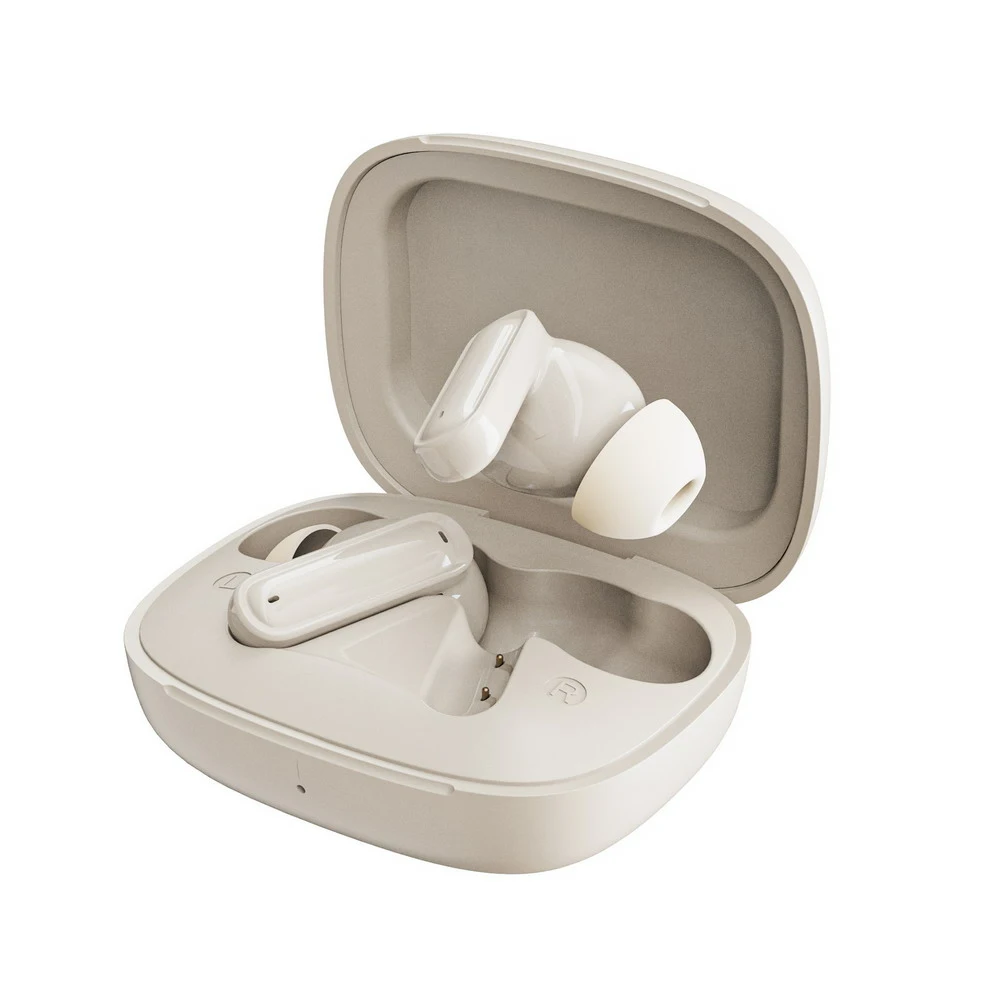
OEM vs. ODM: Get This Straight First
A lot of buyers use these terms interchangeably. Big mistake.
OEM means you bring your own design, your own specs, sometimes your own tooling. The factory just builds it. ODM means the factory already has a design on the shelf, and you slap your logo on it. Both are fine paths. But if you’re asking a factory for OEM ANC earbuds and they only show you a catalog of existing shells, that’s a red flag. They’re not actually set up for OEM work.
Real OEM capability means engineering support, custom tooling, and a BOM you can actually negotiate line by line.
The Chipset Question Nobody Skips Anymore
ANC performance lives and dies on the chipset. This isn’t optional homework anymore, it’s step one.
Qualcomm QCC platforms still dominate the premium tier. Airoha chips have gotten aggressive on price-to-performance, especially for mid-range ANC builds. Bestechnic, often just called BES, shows up constantly in budget-to-mid ANC earbuds because it keeps BOM costs down while still delivering usable noise cancellation. Jieli tends to sit lower on the spec ladder, fine for basic ANC claims, not great for hybrid feedback-feedforward systems.
Ask your factory directly which chipset they’re quoting. If they dodge the question, walk away.
Codec Support Isn’t Just a Spec Sheet Line
Buyers focus so much on ANC dB numbers they forget codec support shapes the actual listening experience. SBC is baseline, every Bluetooth earbud supports it. AAC matters if your target market skews iPhone. aptX matters for Android audiophiles. LDAC is a nice-to-have flex for premium SKUs, but it adds cost and isn’t necessary for most OEM ANC earbuds programs unless you’re chasing a hi-res audio angle.
Match the codec stack to your actual customer base. Don’t overbuild just because a spec sounds impressive on Amazon copy.
Certifications Will Make or Break Your Timeline
This is where I see new buyers get burned every single year.
FCC and CE aren’t optional if you’re selling into the US or EU. RoHS compliance gets checked constantly now, especially by Amazon’s compliance team. BQB certification is required for anything using Bluetooth branding legally. UN38.3 covers the battery for air shipment, and if your factory can’t produce this documentation quickly, your whole shipment gets stuck at customs. UKCA has become its own separate headache post-Brexit, so don’t assume CE covers you for UK sales anymore.
Ask for certification documentation before you commit to a PO, not after.
Working the Pearl River Delta Supply Chain
If you’re sourcing OEM ANC earbuds, you’re almost certainly working somewhere in the Pearl River Delta. Shenzhen handles most of the R&D and chipset integration. Dongguan and Huizhou carry a lot of the actual assembly and injection molding capacity. This geography matters because it affects lead times, MOQ flexibility, and how fast you can iterate on samples.
A factory sitting inside this cluster can usually turn a design revision around in days, not weeks, because every component supplier is a short drive away.
MOQ and FOB Reality Check
Everyone wants low MOQs and low FOB pricing at the same time. That’s not how it works.
ANC earbuds carry more component cost than basic TWS because you’re paying for extra microphones, DSP processing, and tighter acoustic tuning. A factory quoting an unrealistically low FOB on ANC units is usually cutting corners somewhere, often the ANC chip itself or the mic array quality.
Realistic MOQs for OEM ANC earbuds programs usually start in the low thousands per SKU, though some factories will flex lower for established buyers with a track record.
Who I Actually Recommend
I’ve worked with a handful of factories I’d vouch for by name, and Tashells Audio is one I keep coming back to for ANC-specific programs. They’re based in Shenzhen, they run real OEM engineering support rather than just reskinning existing molds, and their documentation process for FCC, CE, RoHS, and BQB has been clean every time I’ve pulled a sample order through them. For buyers who don’t want to babysit every certification step themselves, that matters more than people realize.
Final Thought
OEM ANC earbuds sourcing isn’t complicated once you know what questions to ask. Chipset, codec support, certification readiness, and realistic MOQ pricing. Get those four things locked down with your factory partner, and the rest of the process runs itself.
If you’re evaluating a new supplier this quarter, don’t skip the sample stage. Test the ANC in a real noisy environment, not a quiet showroom. That’s where cheap chipsets fall apart fast.